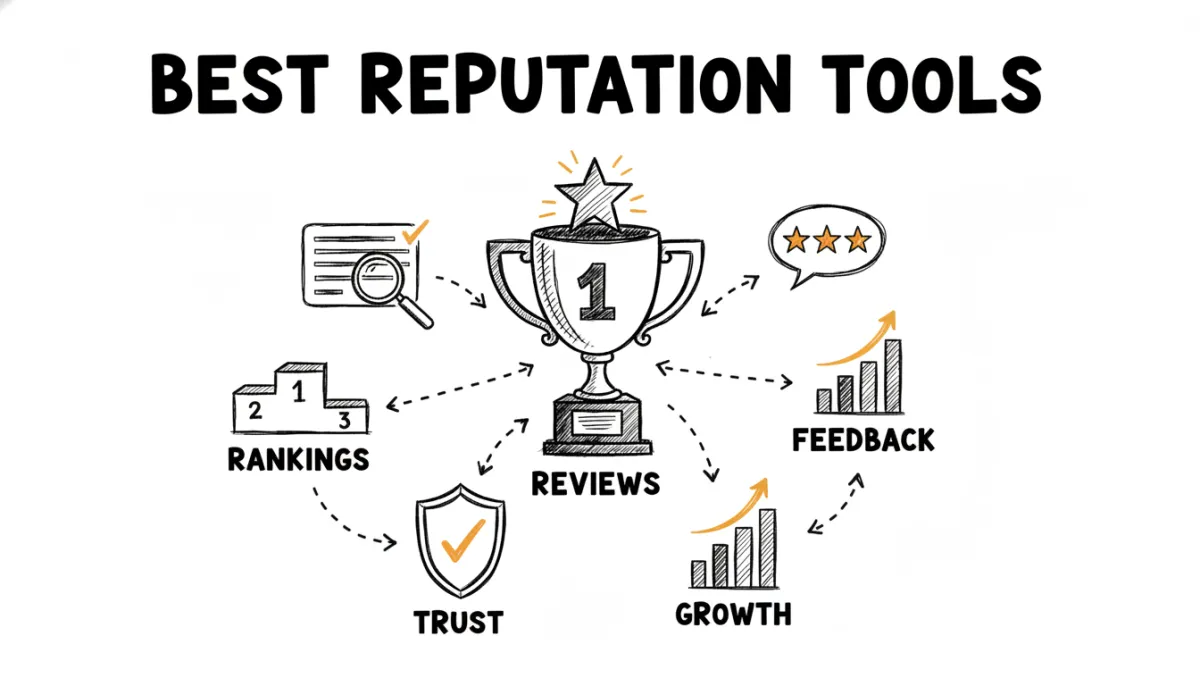
There are dozens of reputation management tools out there, and most of them look the same on the surface. Review collection, response management, analytics dashboards. The differences are in the details: how easy they are to set up, what kind of business they're built for, and how they handle sensitive customer data.
We spent time looking at the most popular options and put together this list. Some are enterprise platforms with sales teams and six-figure contracts. Others are lightweight tools you can set up in an afternoon. We included a range because "best" depends a lot on your situation.
1. RateMind
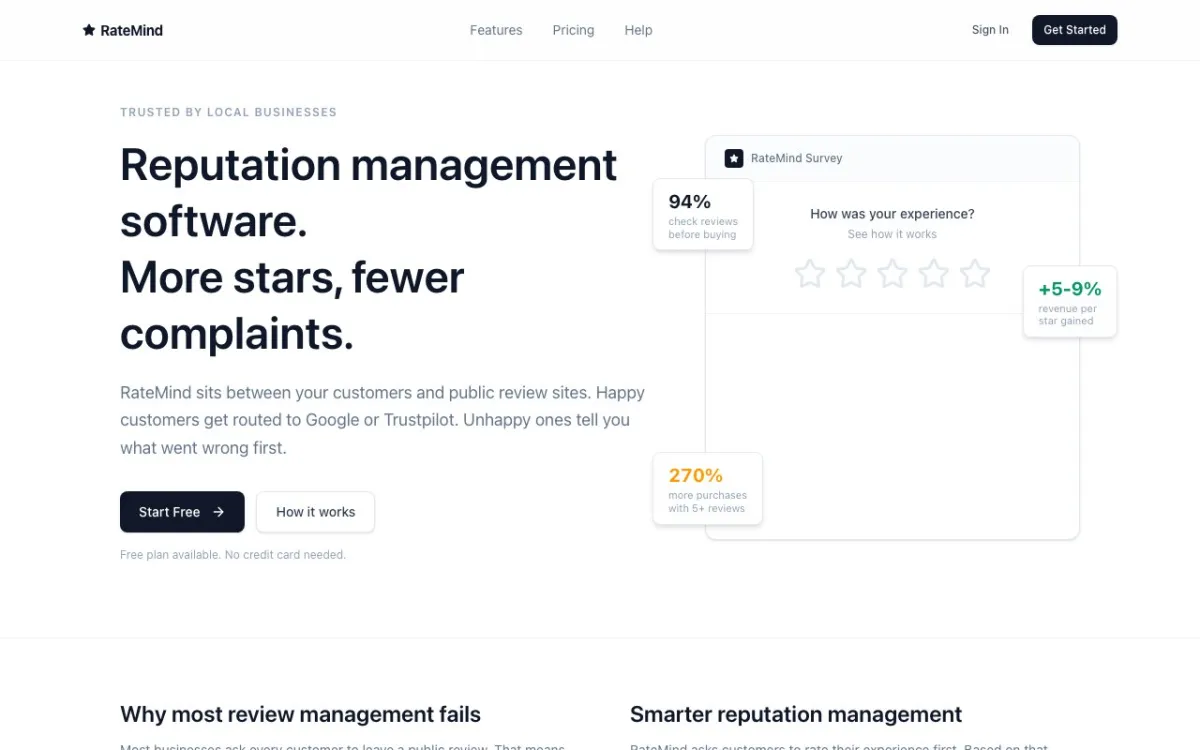
Best for: Small and mid-size businesses that want a simple, privacy-first way to collect reviews and filter negative feedback before it goes public.
RateMind takes a different approach than most tools on this list. Instead of just monitoring reviews after they're posted, it sits between your customer and the review platform. You send a feedback request (via email BCC, QR code, or direct link), the customer clicks a star rating, and based on that score, they either get redirected to Google/Trustpilot or see a private feedback form.
The idea is straightforward: happy customers leave public reviews, unhappy customers tell you what went wrong first. You fix the problem before it shows up on Google.
What stands out:
- The BCC email method means you don't need to change your workflow at all. Just add an address to your email's BCC field.
- Customer email addresses are encrypted with AES-256-GCM before they hit the database. Most tools on this list store emails in plaintext.
- Topic extraction pulls recurring themes from free-text feedback automatically.
- Free plan available. Paid plans start affordable for small teams.
- GDPR-compliant from day one, built in Germany.
Limitations: No social media monitoring. Focused purely on review collection and routing, not brand mention tracking.
2. Birdeye
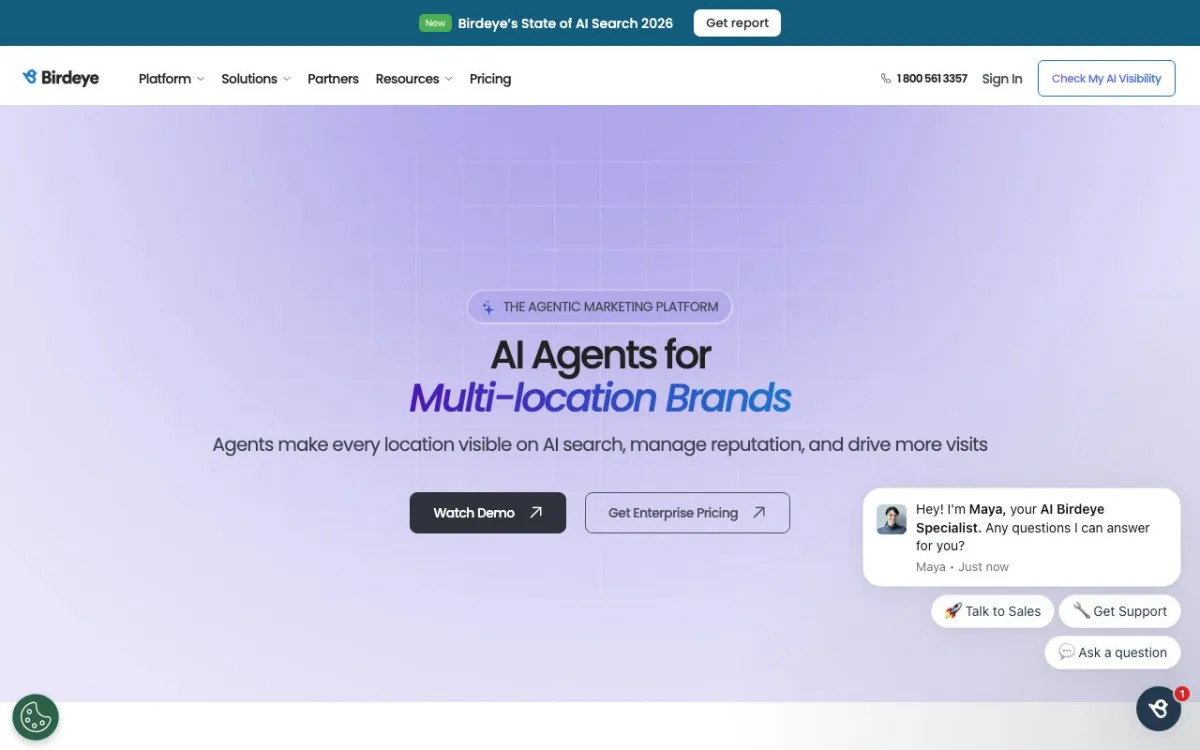
Best for: Multi-location businesses and franchises that need an all-in-one platform covering reviews, listings, messaging, and surveys.
Birdeye is one of the bigger names in this space. They started as a review management tool and expanded into a full customer experience platform with AI agents, chatbots, and listing management. If you run 50+ locations and need centralized control, they have the infrastructure for it.
The trade-off is complexity. Birdeye is not a tool you set up in 10 minutes. There's onboarding, integrations, and a learning curve. And pricing is enterprise-level, so you'll need to talk to sales.
3. Podium
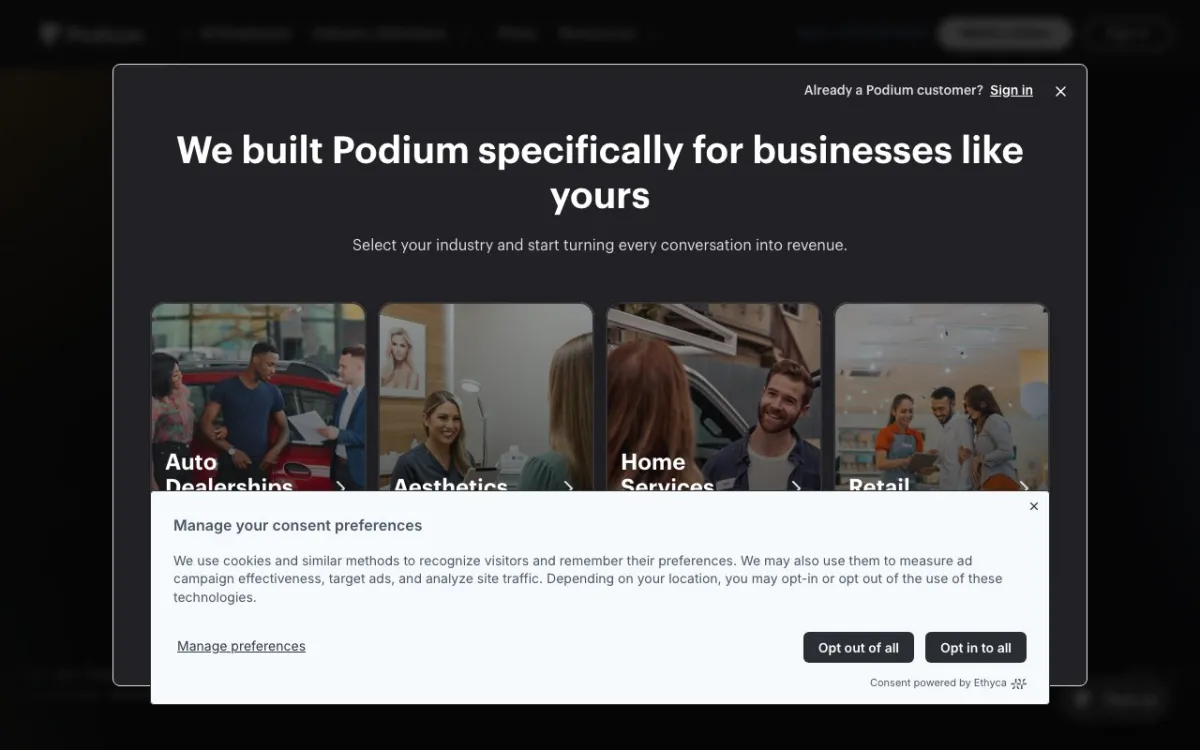
Best for: Local businesses that want to combine review management with customer messaging and payments in one tool.
Podium started with SMS-based review collection and evolved into a communication platform. The core idea: text your customers to ask for reviews, answer questions, and collect payments, all from one inbox. It works well for businesses where text messaging is natural, like auto shops, dental offices, or home services.
The pricing has gone up over the years, and some users report that the platform has become bloated with features they don't need. But for businesses that live on text messaging, it's a strong option.
4. Reputation
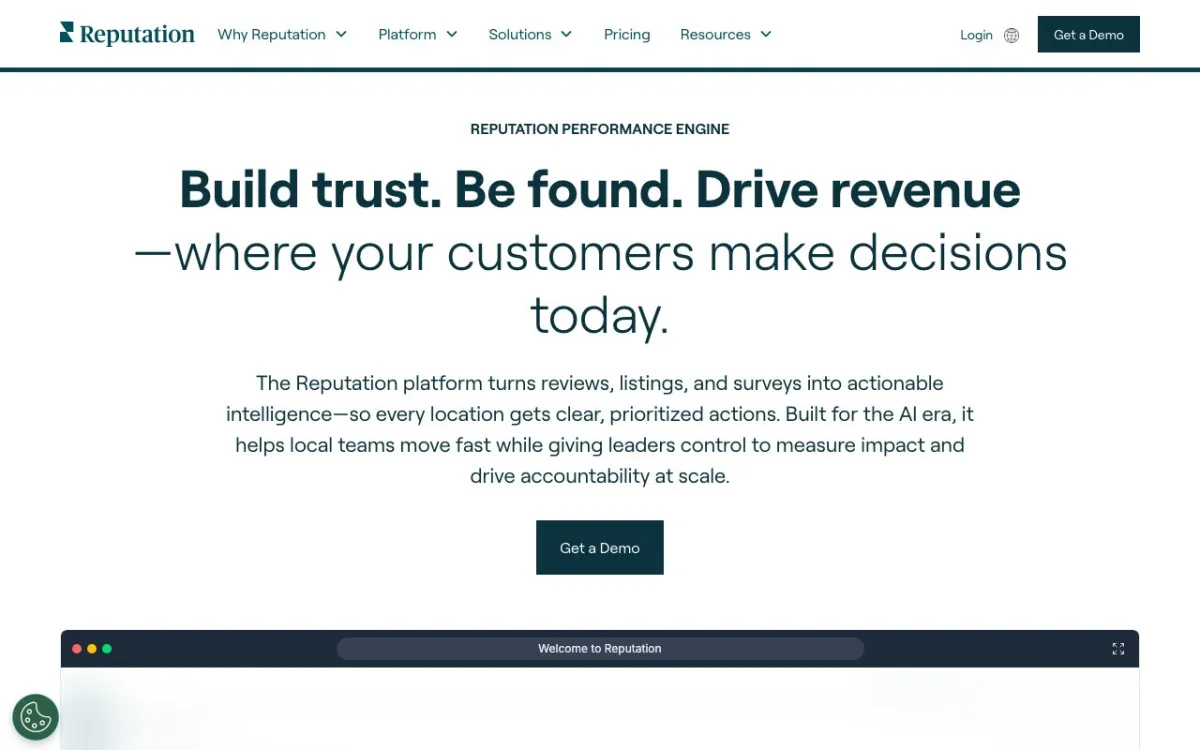
Best for: Enterprise organizations in healthcare, automotive, and hospitality that need a single "Reputation Score" across hundreds of locations.
Reputation (formerly Reputation.com) is the heavyweight of this list. They consolidate reviews, surveys, social mentions, and business listings into one platform and give you a single score to track. Large hospital systems and car dealership groups use it to benchmark locations against each other.
Not a fit for small businesses. Pricing starts high, the platform is complex, and the sales process is long. But if you manage reputation at scale across hundreds of locations, few tools match this depth.
5. BrightLocal
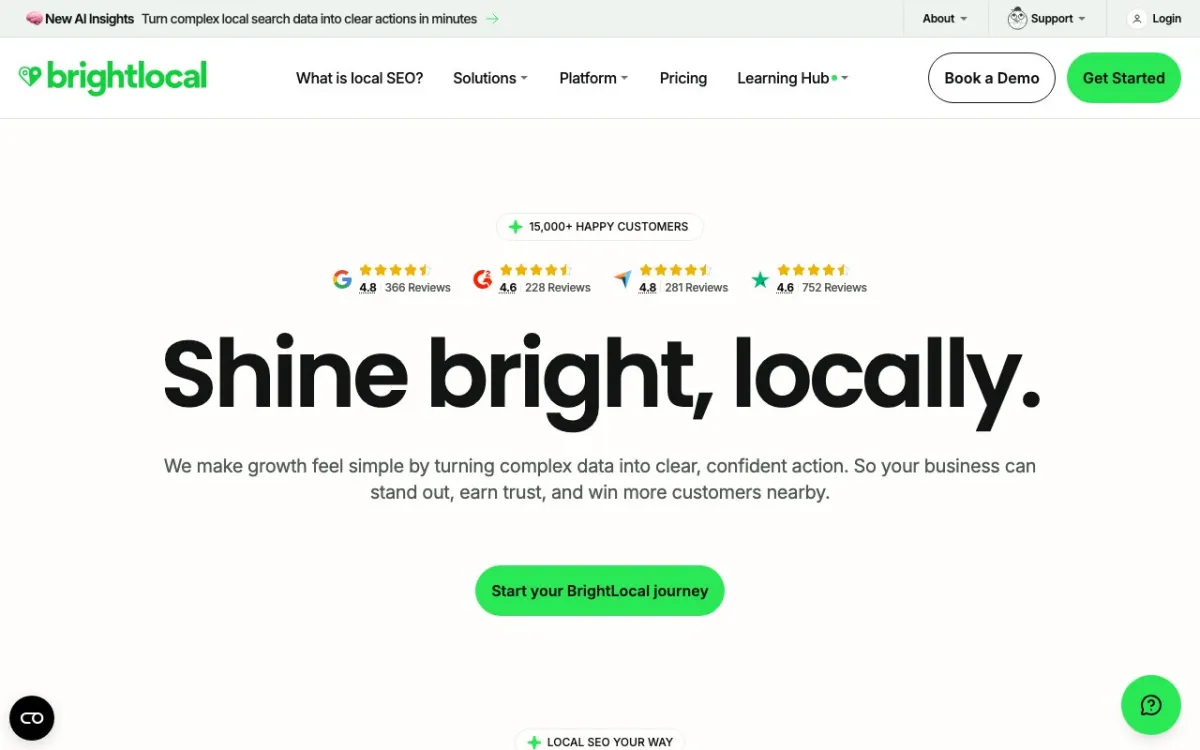
Best for: SEO agencies and local businesses that want reputation management combined with local SEO tools.
BrightLocal is primarily a local SEO platform, but their reputation management features are solid. They offer review monitoring across 80+ sites, review request campaigns, and a review widget for your website. What makes them different is the SEO angle: citation building, local rank tracking, and Google Business Profile audits all live in the same platform.
If you're already doing local SEO work, adding BrightLocal's review management makes sense. As a standalone reputation tool, other options on this list give you more.
6. GatherUp
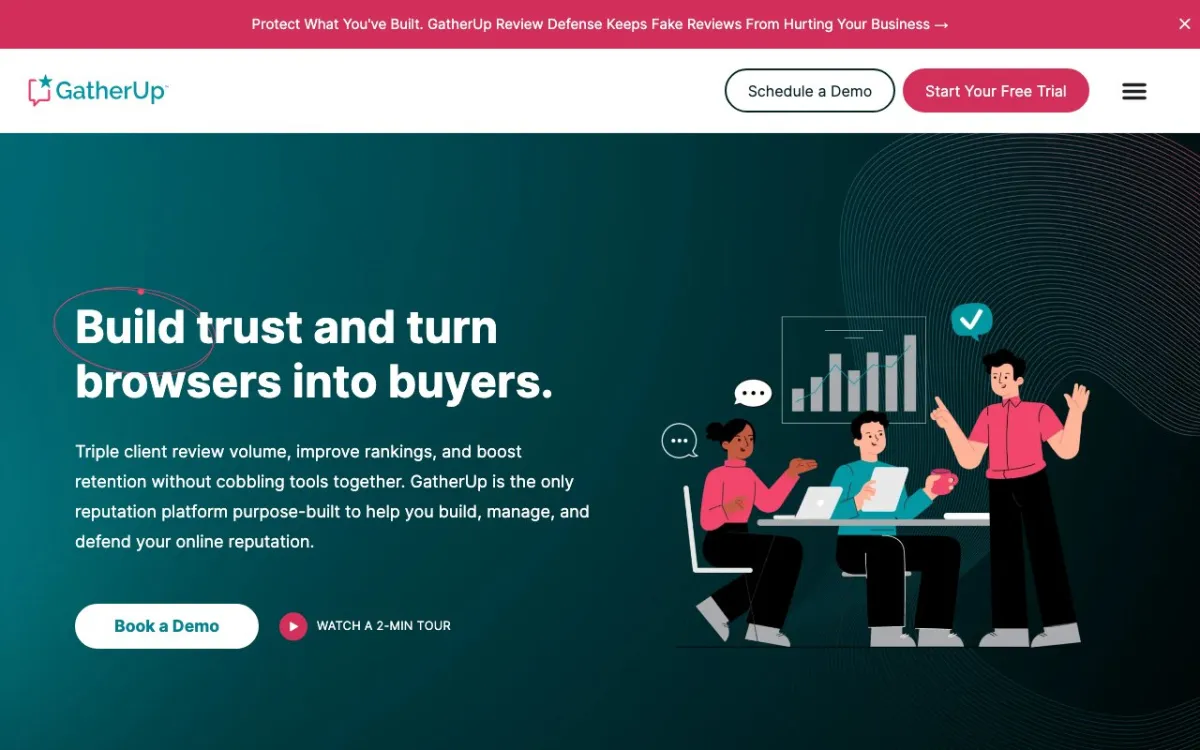
Best for: Multi-location businesses and agencies that need white-label review management with strong reporting.
GatherUp (formerly GetFiveStars) focuses on first-party feedback collection and third-party review management. They have a clean interface for sending review requests, monitoring responses, and generating reports. The white-label option makes them popular with marketing agencies managing reputation for multiple clients.
The reporting is one of their strongest features. You can break down performance by location, time period, and review source. Less flashy than Birdeye or Podium, but more focused on the data side.
7. ReviewTrackers
Best for: Mid-size companies that want strong review monitoring and competitive benchmarking without the complexity of enterprise platforms.
ReviewTrackers aggregates reviews from 100+ sites into one dashboard and uses natural language processing to pull out trends and sentiment. Their competitive analysis feature lets you compare your ratings against local competitors, which is useful for restaurants and retail.
They sit in a nice middle ground between lightweight tools and enterprise platforms. Not as simple as RateMind, not as heavy as Reputation. Good for businesses with 5-50 locations that care about competitive positioning.
8. Grade.us
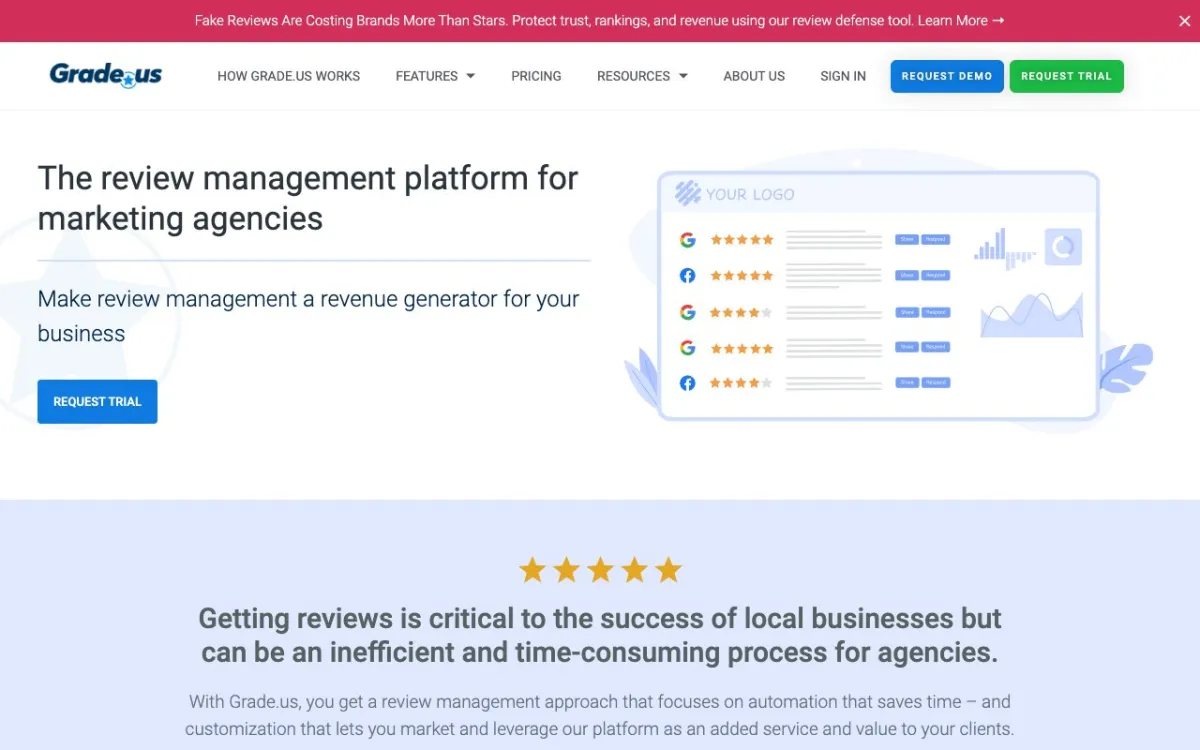
Best for: Marketing agencies that want a white-label review funnel they can resell to clients.
Grade.us is built from the ground up for agencies. You create branded review funnels for each client, send drip campaigns asking for reviews, and manage everything from a central dashboard. The white-labeling goes deep: custom domains, branded emails, client-facing reports.
For individual businesses, Grade.us works fine but feels like it was designed for someone managing 20 clients, not a single location. If you're an agency, though, it's worth a look.
9. Yext
Best for: Large businesses that need to manage their online presence across hundreds of directories and listing sites.
Yext is really a digital presence management platform with review features bolted on. Their core product is the Knowledge Graph, which syncs your business data (name, address, hours, photos) across 200+ directories from a single source. Review monitoring and response tools are part of the package but not the focus.
If your main problem is inconsistent business listings across the web, Yext solves that. If you just need review management, it's overkill and expensive.
10. Brand24
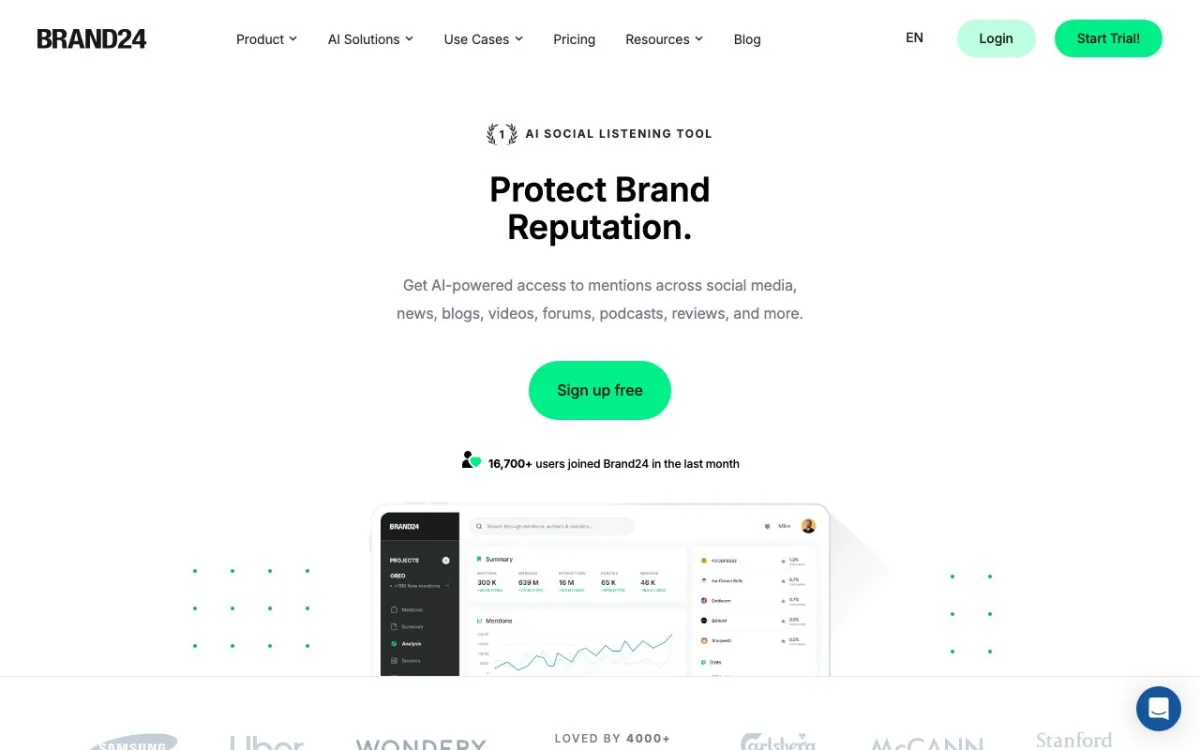
Best for: Businesses that want to monitor brand mentions across the entire internet, not just review platforms.
Brand24 is a media monitoring tool more than a traditional review management platform. It tracks mentions of your brand across social media, blogs, forums, news sites, and review platforms. You get sentiment analysis, influencer identification, and real-time alerts when someone mentions your business.
It's a different tool than the others on this list. If you want proactive review collection and routing, look at RateMind or Podium. If you want to know every time someone talks about your brand anywhere online, Brand24 does that well.
How to Pick the Right Tool
The right choice depends on three things:
- Your size. Running one location? You don't need Birdeye or Reputation. RateMind, GatherUp, or Grade.us will handle it.
- Your main problem. If it's "we don't have enough reviews," you need a tool focused on collection and routing. If it's "we don't know what people are saying about us," you need monitoring.
- Your budget. Enterprise platforms cost thousands per month. Lightweight tools start under $50. Figure out what you actually need before comparing prices.
Most businesses reading this probably fall into the "we need more reviews and fewer public complaints" category. If that's you, start with a tool that makes collection easy and routes feedback based on the customer's experience. That's what we built RateMind to do.