Your online reputation isn't just about vanity metrics. It directly impacts revenue. Studies show that a one-star increase on Google can lead to a 5-9% increase in revenue. And 94% of consumers check reviews before making a purchase decision.
Reputation management software helps you take control of this process instead of leaving it to chance. RateMind, for example, routes happy customers to your public review pages and captures negative feedback privately, so you hear about problems before they end up on Google.
What Reputation Management Software Does
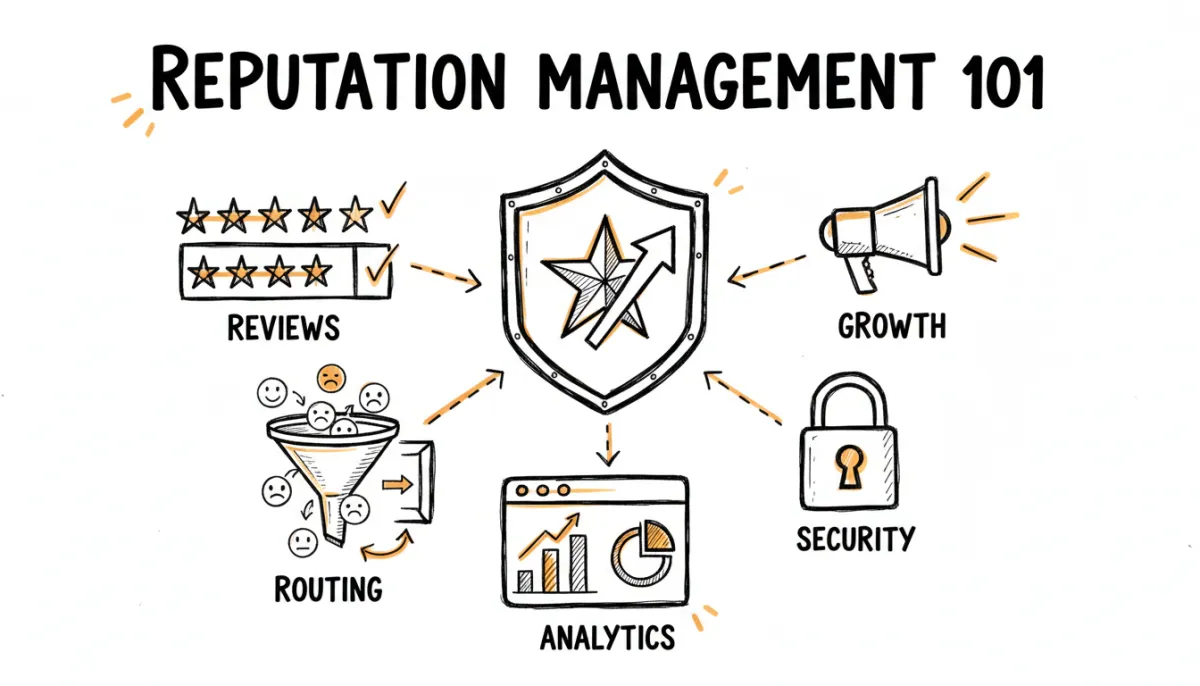
In short, it helps businesses be proactive about reviews instead of reactive. Most tools in this space cover four areas:
- Collecting feedback proactively rather than waiting for customers to find your review page on their own.
- Routing feedback so happy customers go to public review platforms and unhappy customers share feedback privately.
- Helping you monitor and analyze recurring themes, track sentiment over time, and spot areas for improvement.
- Managing reviews across platforms from one place so you can respond efficiently.
The Problem Without It
When you ask every customer for a public review, you're gambling. Happy customers often don't bother. Unhappy customers are motivated to vent. The result is a public rating that doesn't reflect reality.
One bad review can undo months of good work. And once it's public, you're doing damage control instead of prevention.
How Smart Routing Works
The most useful feature in modern reputation management is the rating gate. You ask customers to rate their experience before deciding where that rating goes.
The process is straightforward:
- You send a feedback request via email, QR code, or direct link.
- The customer clicks a star rating.
- Customers who rate 4+ stars get redirected to Google, Trustpilot, or whichever review platform you choose.
- Customers who rate 1-3 stars see a private feedback form where you can learn what went wrong.
This isn't about hiding negative feedback. It's about hearing it first, fixing it, and then asking again later.
What to Look For
When evaluating reputation management software, a few things matter most:
- Ease of setup. Can you start collecting feedback in minutes, or does it require a complex integration?
- What collection methods are supported? Email, QR codes, direct links, BCC integration?
- Platform support. Does it work with Google, Trustpilot, Yelp, TripAdvisor, and others?
- How does it handle data privacy? Is customer data encrypted? Is it GDPR-compliant?
- Analytics. Can you see trends, topics, and patterns in feedback? RateMind, for instance, runs topic extraction on free-text answers to surface the themes customers mention most.
- Does pricing scale with your business?
How RateMind Fits In
RateMind is reputation management software built for businesses that want a simple, privacy-first approach. You set up a survey in minutes, choose your review platform, and start collecting feedback via email BCC, QR codes, or direct links. Happy customers get routed to Google or Trustpilot. Unhappy ones tell you what went wrong privately. All data is encrypted with AES-256-GCM and GDPR-compliant from day one.