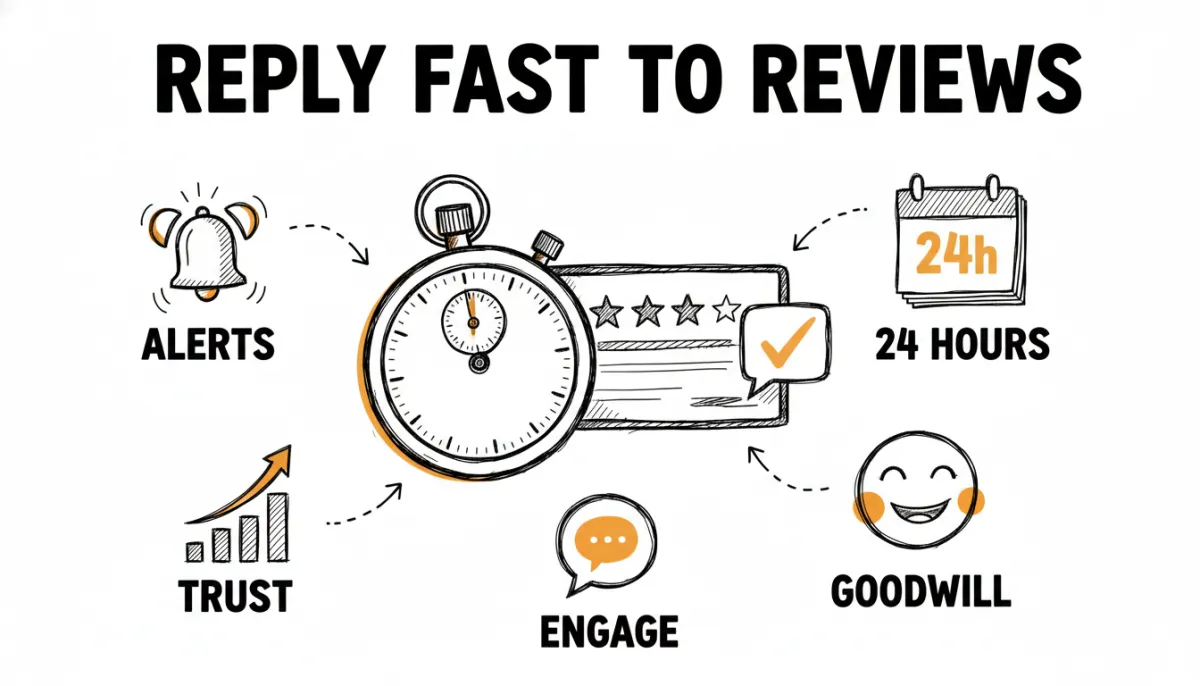
Most advice about reviews focuses on what to say. Just as important, and far less talked about, is how fast you say it. A thoughtful reply that lands two days after a complaint does more good than a perfect one that shows up three weeks late. Speed is part of the message.
This guide covers why response time matters, what counts as fast enough, and how to keep up without checking your review profiles every hour.
Why Speed Matters
Three things happen when you respond quickly, and all of them work in your favor.
You catch the customer while they still care. A customer who left an angry review yesterday is still emotionally invested today. Reach them now and you have a real shot at fixing the problem and changing their mind. Reach them in a month and the moment has passed. They've moved on, and so has any goodwill you might have recovered.
Future customers judge you on it. When a prospect reads your reviews, they notice the gaps. A profile where complaints sit unanswered for weeks signals a business that doesn't pay attention. A profile where every review gets a prompt, human reply signals the opposite. You're being evaluated on your responsiveness by people who will never leave a review themselves.
It limits the damage. An unanswered negative review keeps doing harm for as long as it sits there alone. A quick, calm response underneath it reframes the story. Readers see both sides and your willingness to engage, which softens the impact of the complaint considerably.
What Counts as a Good Response Time
There's no official standard, but here are reasonable targets:
- Negative reviews: within 24 to 48 hours. These are the urgent ones. The customer is upset and future readers weigh negative reviews heavily, so a fast, measured reply matters most here.
- Positive reviews: within a few days. Less urgent, but still worth doing while the review is recent. A thank-you that arrives a week or two later still lands fine. One that arrives three months later feels like an afterthought.
The goal isn't to reply within minutes. It's to be consistent and reasonably prompt, so no review (especially a negative one) sits ignored for weeks.
How to Actually Keep Up
Fast response time only happens if you know about reviews quickly. A few ways to stay on top of it:
- Turn on notifications. Google Business Profile, Trustpilot, and most platforms can email or push you when a new review lands. Switch these on so you're not relying on remembering to check.
- Set a routine. If notifications aren't enough, block a few minutes twice a week to check your profiles and clear any pending replies. Consistency beats intensity.
- Keep a few response templates ready. You don't have to write every reply from scratch. Starting templates for common situations cut your response time dramatically. We have them for negative reviews and positive reviews. Adapt, don't copy-paste.
- Assign one owner. If you have a team, make one person responsible for monitoring and replying. Shared responsibility tends to mean no responsibility, and reviews slip through.
The Fastest Response Is Catching It Before It's Public
Here's the thing about response time: the very fastest way to handle a negative review is to deal with the complaint before it ever becomes a public review at all.
That's the core idea behind RateMind. Instead of waiting for an unhappy customer to post a one-star and then racing to respond, you ask for feedback first. Customers rate their experience, and the unhappy ones land on a private feedback form where they tell you what went wrong. You hear about the problem immediately, in private, and you can resolve it directly with the customer. No public complaint to respond to, no damage to limit, no clock ticking.
For the happy customers, RateMind routes them to your public review page, so your profile fills with positive reviews you'll actually enjoy replying to. Set up your first survey in 5 minutes.