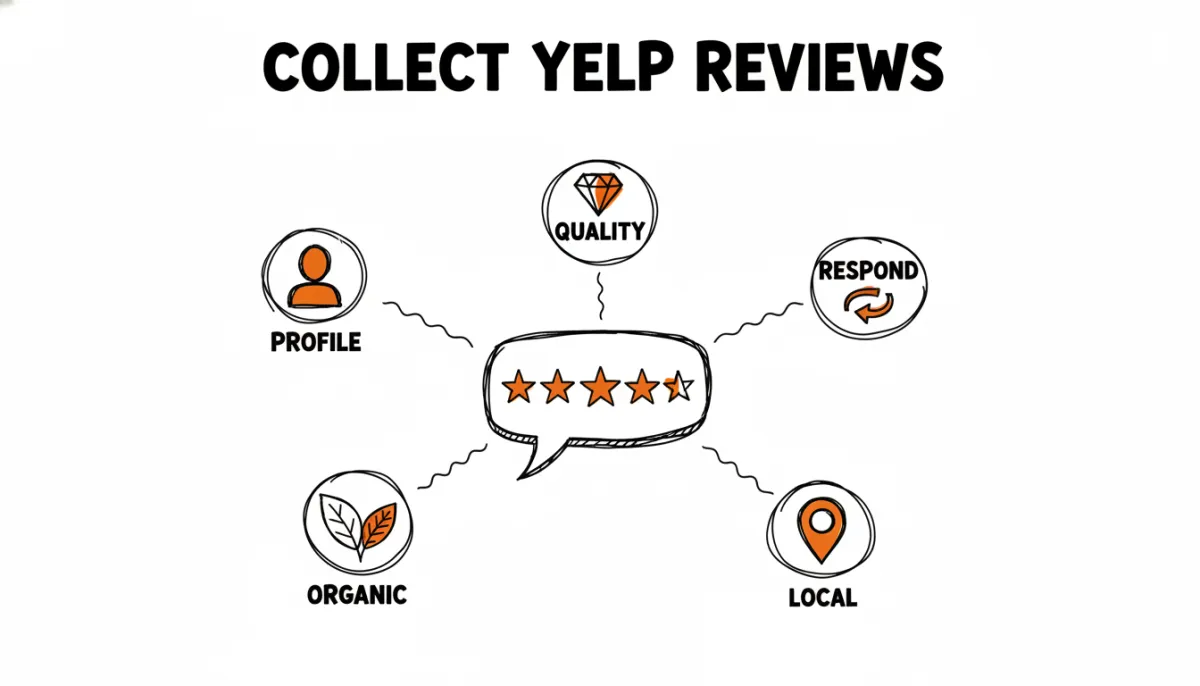
Yelp is different from every other review platform on this list. Google, Trustpilot, and TripAdvisor all encourage businesses to ask customers for reviews. Yelp does the opposite: they explicitly tell you not to ask. And they have a recommendation filter that hides reviews it suspects were solicited.
That makes Yelp frustrating for businesses, but it also makes Yelp reviews unusually credible to consumers. People trust Yelp reviews precisely because they're hard to game. So ignoring Yelp isn't the answer either, especially if you're a restaurant, salon, auto shop, or any local service business where Yelp still drives real customer decisions.
This article covers what you can actually do to get more Yelp reviews within their rules, what triggers their filter, and how to handle the negative reviews that will inevitably show up. Since Yelp penalizes solicitation, the best strategy is to intercept unhappy customers before they reach Yelp, which is where RateMind comes in.
Why Yelp's Rules Are Different
Yelp's position is that reviews should be "unsolicited." They want customers to leave reviews because they want to, not because a business asked them to. Their recommendation software (the filter) uses signals like reviewer account age, review frequency, social connections, and behavioral patterns to decide which reviews to show and which to hide.
Reviews from new Yelp accounts, reviews that arrive in bursts, and reviews that follow a pattern of solicitation are more likely to be filtered. Yelp claims their filter is neutral, but in practice, businesses that actively ask for reviews often see a higher percentage of those reviews hidden.
This means the playbook for Yelp is fundamentally different. You can't just send customers a review link and expect results.
What Actually Works on Yelp
1. Make your Yelp page easy to find
You can't ask customers to leave a Yelp review, but you can make sure they know you're on Yelp. Put a "Find us on Yelp" badge on your website, your front door, or your menu. Yelp provides free badges and stickers for this purpose.
The distinction matters: "Check us out on Yelp" is fine. "Please leave us a 5-star Yelp review" is not. You're making yourself visible, not soliciting specific action.
2. Claim and complete your business profile
Go to biz.yelp.com and claim your listing if you haven't already. Fill in every field: hours, categories, photos, menu (if applicable), specialties, history. A complete profile ranks higher in Yelp search and gives customers more reasons to engage.
Upload real photos. Businesses with good photos get substantially more views. Yelp's own data shows that businesses with at least 10 photos get more page views and more customer engagement. Don't use stock photos, because Yelp's community moderators flag them.
3. Respond to every review
Responding to reviews, both positive and negative, signals to both Yelp and future customers that you're an active, engaged business. For positive reviews, a short thank-you is enough. For negative reviews, see our response templates guide.
Responding also encourages more reviews indirectly. When potential reviewers see that a business owner reads and replies to feedback, they're more likely to write their own review.
4. Focus on the experience
This sounds obvious, but it's the only sustainable strategy on Yelp. When you deliver a genuinely great experience, some customers will leave reviews on their own. Not many, since the organic review rate is low, but Yelp reviews written voluntarily by established Yelp users are the ones that stick. They don't get filtered.
Pay special attention to the moments that create strong impressions: the greeting, the resolution of a problem, the small unexpected touch. Those are the experiences that make someone pull out their phone and write.
5. Handle check-ins and Yelp deals
Yelp's check-in feature lets customers share that they visited your business. Customers who check in are already engaged with your Yelp page, and they're more likely to leave a review later. Some businesses add a small incentive for checking in (a free appetizer, a small discount), which Yelp allows, since the check-in isn't a review.
Similarly, Yelp Deals and Gift Certificates bring Yelp-active users to your business. These customers are exactly the demographic that leaves reviews.
What Triggers the Filter
Understanding what Yelp's recommendation filter looks for helps you avoid the common mistakes:
- Burst of reviews. If you normally get 1-2 reviews per month and suddenly get 15 in a week, most of those 15 will be filtered. Yelp interprets review spikes as solicitation.
- Reviews from new accounts. First-time Yelp users who create an account just to leave your business a review are very likely to be filtered. The reviewer's account needs history.
- Reviews from out-of-area accounts. If your restaurant is in Portland and five reviews come in from accounts based in Miami, Yelp notices.
- Reviews that sound similar. If multiple reviews mention the same specific thing ("thanks for the amazing service, Sarah!"), Yelp's text analysis flags potential coordination.
None of this means you should try to game the filter. The filter is doing what Yelp users want: surfacing genuine reviews. Work with it by creating genuine experiences worth writing about.
Dealing with Negative Yelp Reviews
Because you can't actively solicit positive Yelp reviews, negative ones hit harder on Yelp than on other platforms. Your response strategy matters more here.
Two rules:
- Respond publicly, resolve privately. Write a professional public response acknowledging the issue. Include a way for the customer to reach you directly. Don't argue in the public thread, since every response is visible to future customers.
- Flag genuinely fake reviews. If a review is clearly fake (wrong business, factual impossibility, a competitor), use Yelp's Report function. Don't abuse it, because Yelp reviewers have the right to a bad opinion, and "I disagree with their characterization" isn't grounds for removal.
Catch Negative Feedback Before It Reaches Yelp
The most effective Yelp strategy isn't about Yelp at all. It's about hearing from unhappy customers before they're motivated enough to open Yelp and write a complaint.
If a customer had a bad experience at your restaurant, there's a window, usually a few hours, where they're frustrated but haven't written a review yet. If you reach them in that window with a feedback request, they'll tell you what went wrong instead of telling Yelp. You fix the problem, follow up personally, and the review never gets written.
How RateMind Helps with Yelp
RateMind doesn't send customers to Yelp (since Yelp discourages solicited reviews). Instead, it solves the bigger problem: catching negative feedback privately before it ends up on any public platform.
You share a feedback link with your customers via email BCC, QR code, or direct link. Customers click a star rating. Happy customers can be routed to Google or Trustpilot (platforms that welcome solicited reviews). Unhappy customers see a private feedback form where they tell you exactly what went wrong.
For Yelp specifically, this means fewer 1-star reviews showing up on your page because you addressed the complaint before the customer got to Yelp. And your Google and Trustpilot profiles get stronger at the same time.